The VHS, known as the video home system or the VCR known as the video cassette recorder, was
first introduced in Chicago at CES in 1977 (yes, the same CES that is now held in Las Vegas). As the naming suggests, the VHS was created for home entertainment in mind. Before the VHS came watching movies from your home wasn't a thing. You either had to go to the movies or watch what was on TV when it was on, or you missed it. VHS, which came first, made it possible for an entire movie that was 2 hours or shorter to be put onto a tape that could be sold cheaply due to two Japanese companies Named Sony and Japanese Victor Company (JVC). Home entertainment spiked in the 80s and paved the way for buying and watching movies at your own convenience.
VCRs, on the other hand, were created in 1956 but weren't mass-produced until 1979. What made the VCR so popular is that it allowed you to hook up a VCR to your TV and record what was on your screen. With the VCR, a person's schedule didn't have to revolve around what was on TV because the VCR allowed you to set it to record your TV at a certain time and watch it later without missing out. The VCR is what paved the way for Digital Video Recorders (DVR), a feature in many cable boxes.
Very shortly after VHS became widely available, a less popular video format known as laserdisc was created. Laserdisc is the precursor to DVDs with the most noticeable difference in size.
The difference between VHS and laserdisc is that VHS was analog while laserdisc and DVDs are considered digital, which has their advantages. With VHS, you had to manually rewind and fast-forward. This has its advantages and disadvantages. When you took out a VHS tape, it would remain at the exact spot you left off, whereas laserdisc would not save your spot. The downside of VHS is that every time you finish the video, you have to rewind it so that the next person can watch it. People got angry if they had to the previous person did not rewind the tape.
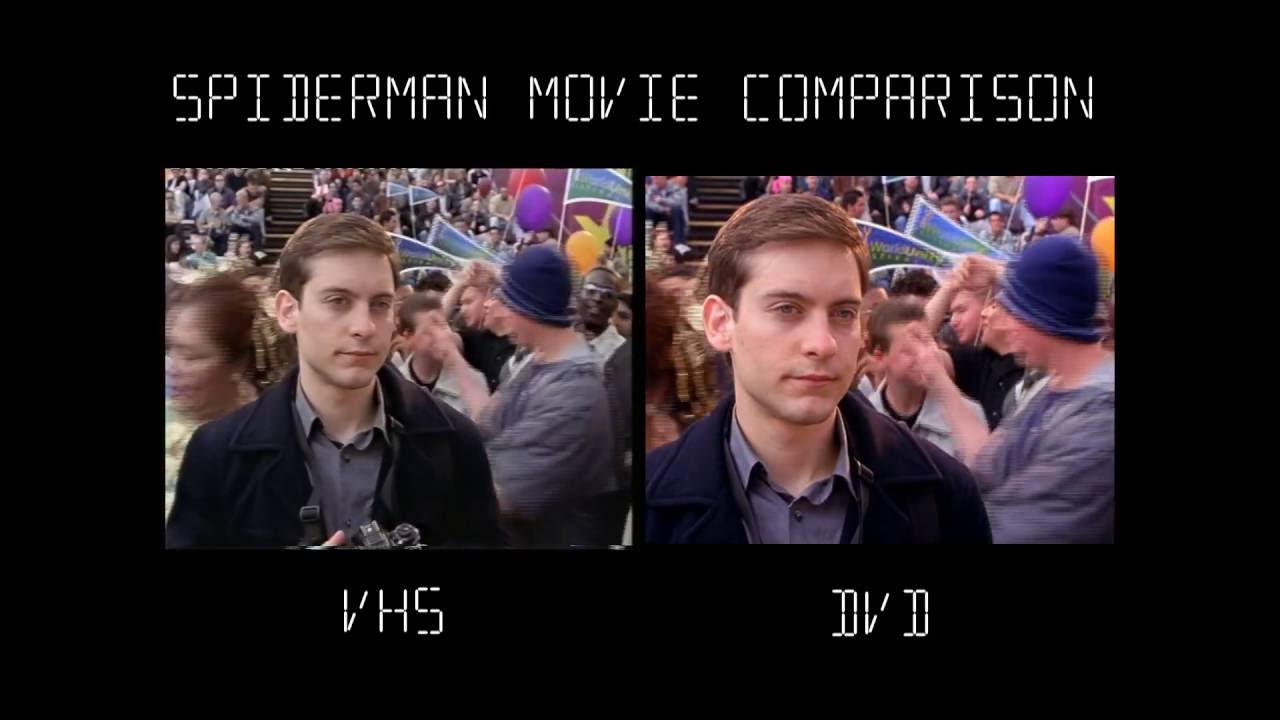
Today we are up to 4k or 8k video resolution, but in the 80s, VHS had poor video quality compared to its digital counterpart. The color was also limited on VHS as it used composite color. As you can see, the DVD has more vibrant colors compared to VHS tape.
Compared to discs, VHS was recorded on tape, which could be easily tampered with if you knew how to open the tape head manually when it was not being played. VHS tapes would deteriorate over time and get damaged if they weren't handled carefully. If a tape was damaged, it would sometimes result in weird effects on the screen when the tape tried to play over the damaged part.
The VHS had a big impact on our world as it paved the way for future formats such as DVD and Blu-ray. It s allows you to plug anything into your TV and be able to play whatever you want off of it. It also allowed for video recording on cassette tapes which I still find better than DVRs or any other digital way of recording media. With VHS and VCR, you own the tape that you recorded the video on. In contrast, you're storing the video in places that you do not own, such as cable boxes. It also allowed for video sharing. You could go anywhere, and the video would still be able to be played off of the VHS tape if they have a VHS player.
In 2022 VHS is essentially dead for the most part unless you still own a VHS player and the tapes since we have more advanced ways of watching movies. Even though you may not own the movies nowadays, streaming has made it even easier to watch movies than someway VHS did, but it's still not as good as VCRs were for recording videos because of today's strict copyright protection laws, which were;t as big as they were in the '80s.
If VHS/VCR never became popular, how we watch movies and shows might have changed drastically from what they are today.



No comments:
Post a Comment